

The Mortgage Helper: How Legal Secondary Suites Work in Calgary
TLDR
A legal secondary suite in Calgary can help you qualify for a bigger mortgage, generate steady rental income, and make your home more valuable at resale — but only if it's actually legal. The gap between a "suite" and a registered suite is the difference between income a lender will count and income they'll ignore entirely. This guide covers the three suite categories buyers encounter, what the building code actually requires, how the City's Secondary Suite Registry works, what Calgary's 2026 zoning changes mean for suites, and how lenders treat suite income when you qualify. Read on for the full picture, or scroll down to see what a suited property looks like in a few Calgary communities right now.
Why Legal Secondary Suites Matter More Than Ever in Calgary
The math is straightforward. A basement suite renting for $1,200 a month is $14,400 a year against your mortgage. For a first-time buyer stretching to get into a detached home or half duplex, that's often the difference between qualifying and not qualifying.
But the word "legal" carries all the weight in that sentence. Lenders will generally only count rental income from a suite that's legal and self-contained. An unpermitted basement apartment with a hot plate and a bedroom doesn't count — and worse, it can expose a buyer to enforcement action, insurance problems, and remediation costs after possession.
Calgary has more than 13,000 registered suites on the City's books, and roughly half of those already existed physically before being brought up to code and made official. That tells you something important: a lot of Calgary suites started out illegal. Knowing how to tell the difference is a core buyer skill in this market.
Legal vs. Legal Non-Conforming vs. Illegal Suites
These three terms get used loosely and mean very different things.
Legal (registered) suite
The suite has all required permits, has passed City inspection, meets the National Building Code – Alberta Edition, and appears on Calgary's Secondary Suite Registry. It has its own address suffix and a numbered registry sticker at the entrance. This is the gold standard — lenders count the income, insurers cover it, and it transfers cleanly on sale.
Legal non-conforming suite
The suite was lawfully established under earlier rules and was grandfathered when regulations or zoning changed. It's not illegal, but it also may not meet today's code in every respect. Mortgage insurers generally treat legal non-conforming suites as acceptable, but the specifics matter and should be confirmed in writing.
Illegal (unauthorized) suite
Built without permits, never inspected, or located where suites aren't allowed. These are common in Calgary and frequently marketed with careful wording — "lower level with kitchenette," "in-law setup," "development in basement." Lenders typically won't count the income, insurers may deny claims, and the City can require the suite be removed or brought up to code at the owner's cost.
The practical takeaway for buyers: never assume. A second kitchen is not evidence of legality.
How to Check the Calgary Secondary Suite Registry
The City maintains a free, searchable online registry of every legal and safe secondary suite in Calgary. It's the fastest verification tool available, and it takes about ten seconds.
- Search the property address on the City's secondary suite registry map
- If the address appears, the suite has been permitted and inspected
- If it doesn't appear, the suite is not registered — treat it as unauthorized until proven otherwise
- Registered suites also carry a numbered sticker posted at the suite entrance
- The registry stays attached to the address, so it transfers to the new owner on sale
If you're renting rather than buying, the same check applies before you sign a lease.
What Makes a Secondary Suite Legal in Calgary
Requirements vary depending on whether the suite is being newly built or an existing suite is being legalized, but these are the elements that come up consistently:
- A separate entrance — a private entrance to the suite, distinct from the main entry to the home (a shared stairwell vestibule can be acceptable in some configurations)
- Egress windows — bedroom windows sized for escape, with proper window well clearance and casement windows that swing a full 90 degrees
- Fire separation — rated separation between the suite and the primary dwelling, including protection of exterior wall openings to limit fire and smoke spread
- Ceiling heights — minimum clearances that older basements sometimes fail without underpinning
- Smoke and carbon monoxide alarms — interconnected between units
- Separate heat source — newer suites typically require their own furnace or heating system
- Kitchen, bathroom, and sleeping area — the unit must be genuinely self-contained
- A separate address — the City assigns a suffix address to the suite
- Parking — requirements vary by district and can change with zoning updates
This is not a complete code checklist, and requirements shift. Anyone building or legalizing a suite should confirm current standards with the City's Planning Services Centre and work with a permitted contractor.
Calgary Zoning and Secondary Suites: Where Things Stand
Two separate rezoning events get conflated constantly, so it's worth separating them.
2018 — suites permitted citywide. Council approved blanket rezoning to allow secondary suites across Calgary and made the suite registry mandatory. This is the change that matters most for suites specifically, and it remains the foundation of the current system.
2024 — blanket rezoning to R-CG. In August 2024, most established residential lots were automatically redesignated to R-CG (Residential Grade-Oriented Infill), which permits rowhouses, townhouses, and fourplexes alongside suites, and let owners skip the land use redesignation process.
2026 — repeal of blanket rezoning. Council voted in April 2026 to repeal the citywide R-CG designation, with the change taking effect August 4, 2026. Most established lots revert to R-C1 or R-C2, while properties with approvals already in process generally retain R-CG. Council also directed Administration to bring forward amendments that would make secondary suites and backyard suites permitted uses across low-density districts rather than discretionary ones.
What this means for suites: secondary suites remain broadly allowed in Calgary — the repeal targeted rowhouse and fourplex density, not suites. But parking requirements, height, lot coverage, and backyard suite rules are all in flux, and two lots that look identical can have different zoning depending on their permit history.
Zoning is property-specific and changing. Confirm your address on the City's rezoning map before making assumptions, and reach out if you'd like help interpreting what it means for a specific property.
Amnesty and Incentive Programs Worth Knowing About
Two City programs currently reduce the cost of going legal:
- Secondary Suites Amnesty Program — development permit and registry fees are waived through December 31, 2026 for owners legalizing an existing suite
- Secondary Suite Incentive Program — qualifying homeowners can receive up to $10,000 toward building and registering a suite, subject to available funding and reviewed first-come, first-served
For a seller sitting on an unpermitted suite, or a buyer weighing a property with one, these programs materially change the cost-benefit math. Funding and deadlines change, so verify current status with the City before counting on either.
How Lenders Treat Secondary Suite Income
This is where legality translates directly into buying power.
The suite generally has to be legal. Lenders and mortgage insurers will typically only count rental income from a suite that's legal and self-contained. Legal non-conforming suites are usually acceptable; unauthorized suites generally are not.
Two calculation methods. Lenders either use a rental offset (the rent reduces your housing costs in the debt ratio calculation) or an add-back (the rent is added to your qualifying income). Add-back is usually the more generous of the two.
The percentage varies widely. For an owner-occupied home with a legal suite, mortgage insurers may allow up to 100% of gross rental income to be considered. In practice, major A lenders often apply somewhere in the range of 50–70% using the offset method, while some credit unions and alternative lenders apply a higher percentage using add-back. For properties you don't live in, lenders typically count considerably less.
Individual lender policy can be tighter than insurer guidelines. Two lenders can look at the same suite and the same rent and arrive at meaningfully different pre-approval numbers.
I'm a Realtor®, not a mortgage professional — the specifics of how a particular lender will treat suite income depend on the product, your file, and current policy. If a mortgage helper is central to your purchase plan, talk to a mortgage broker early, and get the treatment confirmed before you write an offer. I'm happy to make an introduction.
What a Suited Property Looks Like Right Now
A couple of examples from our current featured listings that illustrate the two most common suite scenarios:
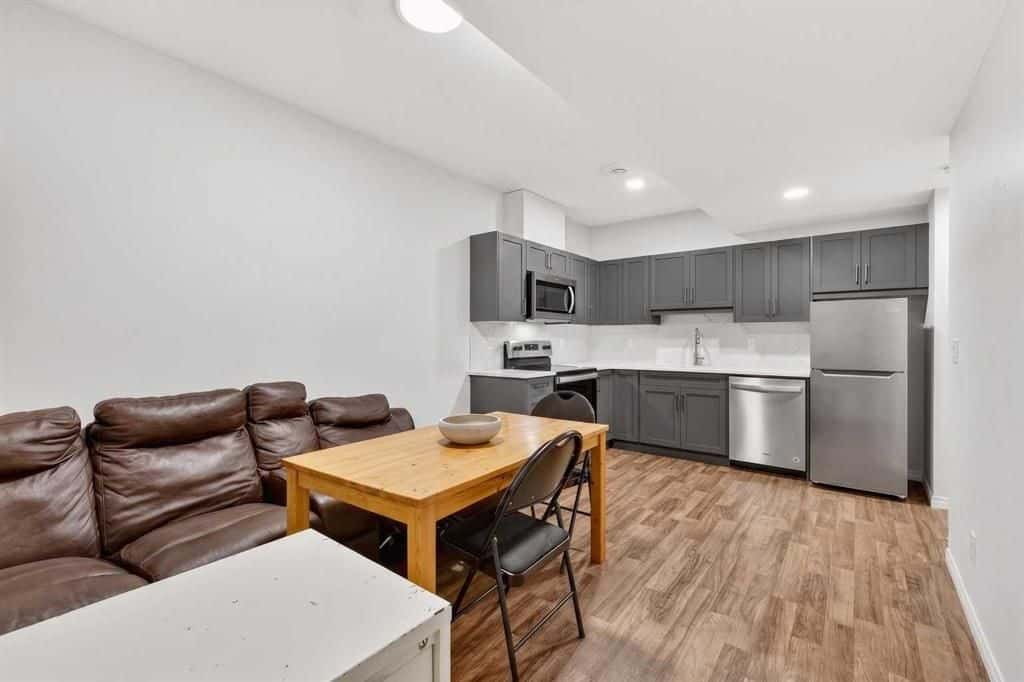
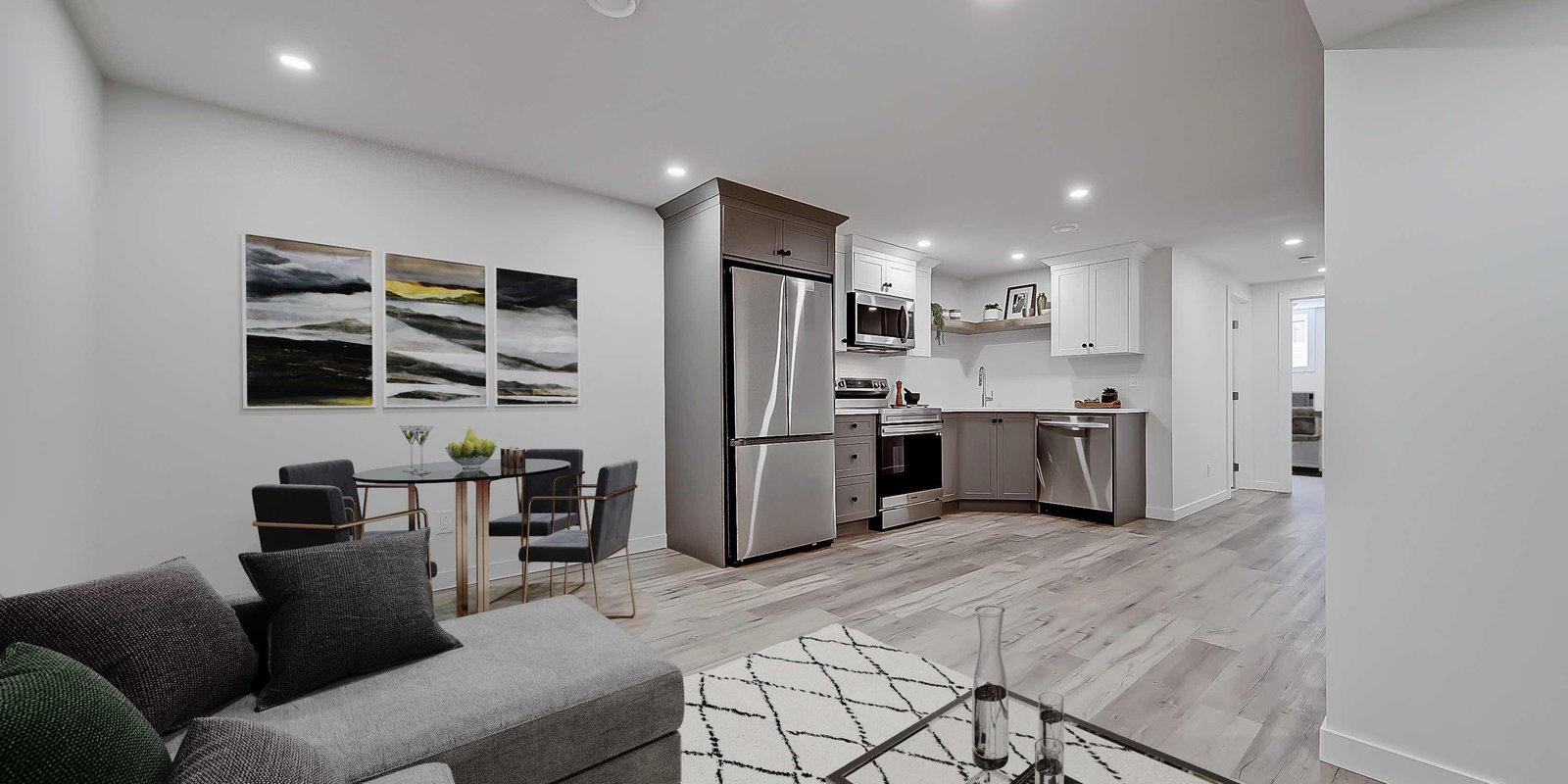
- Beddington Heights — an updated bi-level half duplex with a legal basement suite: separate entrance, second full kitchen, two bedrooms down, its own bathroom, and separate laundry. This is the classic first-time-buyer mortgage helper — live upstairs, rent the lower level, and have a tenant contribute to the payment from day one. Browse more NW Calgary homes.
- Capitol Hill — a bungalow on a full 50-foot inner-city lot with income from both levels, currently rented. This is the hold-and-redevelop play: rental income covers carrying costs while an investor or builder plans the next step on a well-located parcel near Confederation Park.
Both are worth a look if you're weighing suite income as part of your strategy. Reach out any time for full details or a private showing.
Buying a Home with a Suite: A Due Diligence Checklist
- Search the address on the City's Secondary Suite Registry before writing an offer
- Ask the listing agent directly whether the suite is legal, legal non-conforming, or unauthorized — and get the answer in writing
- Confirm permits and final inspection records through the City
- Have your mortgage broker confirm how the lender will treat the income at this specific property
- Check that your insurer will cover a tenanted property, and disclose the suite
- If the suite is unauthorized, price in the cost and timeline of legalizing it — or negotiate accordingly
- Review the tenancy: existing lease terms, rent amount, deposits, and whether vacant possession is available
- Understand your obligations as a landlord under Alberta's Residential Tenancies Act
Our buyer's guide covers the broader offer and conditions process in more detail.
Selling a Home with a Suite
If your suite is legal and registered, that's a headline feature — it should be measured, photographed, and stated plainly in the listing, because it widens your buyer pool to include investors and buyers who need the income to qualify.
If your suite isn't legal, you have three honest options: legalize it before listing (the amnesty window makes this cheaper than usual), disclose it accurately and price accordingly, or remove it. What doesn't work is vague listing language — it creates conditions that fall apart and buyers who walk after inspection.
Market conditions shift month to month, so if you want current pricing or inventory on suited properties in a specific community, reach out — I can pull the latest CREB data for your situation rather than relying on a number that may already be out of date by the time you read this. You can also review our Calgary market statistics any time.
FAQ: Legal Secondary Suites in Calgary
How do I know if a basement suite in Calgary is legal? Search the property address on the City of Calgary's Secondary Suite Registry. If the address appears on the map, the suite has been permitted and inspected. If it doesn't appear, treat it as unauthorized until you can confirm otherwise through City permit records.
Are secondary suites allowed everywhere in Calgary? Secondary suites have been broadly permitted across Calgary since the 2018 citywide rezoning for suites. However, specific requirements — including parking and whether a suite is a permitted or discretionary use — depend on your property's land use district, which is subject to change. Always confirm your address on the City's zoning map.
What's the difference between a legal and a legal non-conforming suite? A legal suite meets current requirements and is registered. A legal non-conforming suite was lawfully established under earlier rules and grandfathered when regulations changed. Both are generally acceptable to lenders; an unauthorized suite typically is not.
Can I use basement suite income to qualify for a mortgage in Calgary? In most cases, yes — if the suite is legal and self-contained. For an owner-occupied property, insurers may allow up to 100% of gross rental income to be considered, though individual lenders commonly apply a lower percentage. Confirm with a mortgage broker before writing an offer.
How much does it cost to legalize a secondary suite in Calgary? It depends entirely on what work the suite needs — egress windows, fire separation, and heating are the usual cost drivers. The City's amnesty program has waived development permit and registry fees through December 31, 2026, and the Secondary Suite Incentive Program offers up to $10,000 to qualifying homeowners.
What happens if I buy a home with an illegal suite? You inherit the problem. The City investigates complaints and can require an unauthorized suite be brought up to code or removed at the owner's expense. Your insurer may also decline coverage for an undisclosed tenanted unit. Price and negotiate accordingly.
Does a legal suite increase property value in Calgary? Generally yes — a registered suite widens the buyer pool to include investors and buyers who need the income to qualify, and it removes the uncertainty discount that unauthorized suites carry.
Did the 2026 rezoning repeal eliminate secondary suites? No. The repeal, effective August 4, 2026, targeted the citywide R-CG designation that allowed rowhouses and fourplexes. Secondary suites remain broadly permitted, and Council directed Administration to bring forward amendments making suites permitted uses across low-density districts.
Which Calgary communities are good for suited properties? Established communities with larger lots and older housing stock tend to have the most suite potential — Beddington Heights, Capitol Hill, Southview, Dover, and Bowness among them. Inner-city communities like Capitol Hill also carry redevelopment upside. Browse Calgary communities to compare.
Have a question about buying, selling, or legalizing a suite that isn't covered here? Reach out — I'm happy to walk through the specifics of your property.
Thinking about buying or selling a home with a secondary suite? I'd love to walk you through what's available and what fits your plan.
JESSE DAVIES | Realtor® | JD Real Estate
Century 21 Bamber Realty Ltd.
403-969-2363 | jdrealestatecalgary.ca
jesse@jessedavies.ca
The people behind every successful move.
Follow the Jesse Davies Team for Calgary listings, local market insight and a closer look at the REALTORS® working behind every transaction.